Introduction:
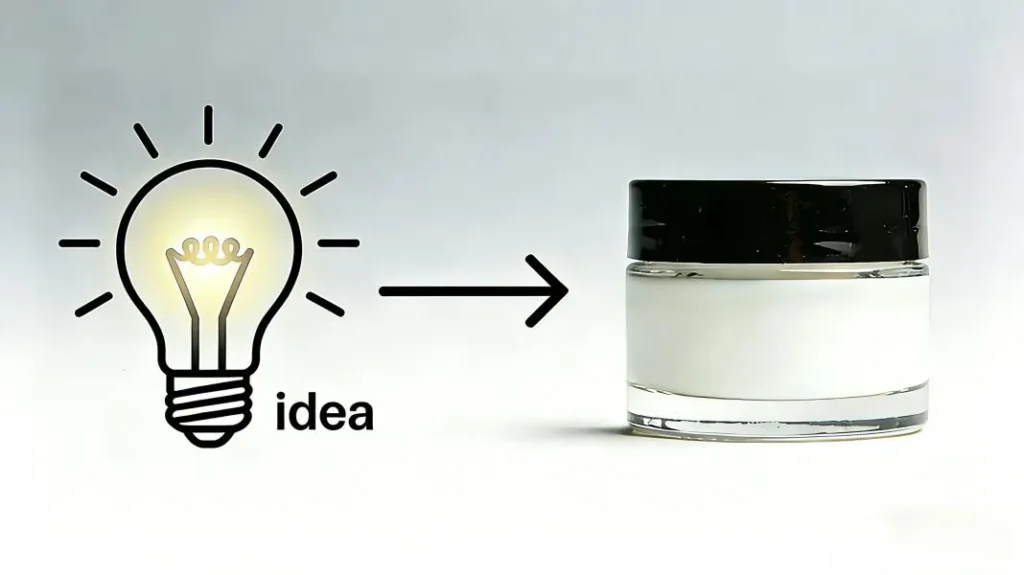
Launching a beauty or personal care brand, but don’t want to build your own factory? Cosmetic contract manufacturing is the reality for most successful beauty brand.
This “step-by-step guide” will walk you through every stage—from factory selection, sampling, compliance to packaging, mass production, and delivery. And we will identify the most common mistakes made during cosmetic production.
CATALOG
Chapter 1: What is Cosmetic Contract Manufacturing?
Compared with private label service, Choosing cosmetic contract manufacturing means you provide the brand vision and market insights; the manufacturer helps bring your concepts into real products.
This process is not a simple case of “outsourcing,” but rather a profound synergy between long-term brand and industrial expertise.
Chapter 2: Pros and Cons of Cosmetic Contract Manufacturing
Pros of Cosmetic Contract Manufacturing
| Pros | Insight |
|---|---|
| Product Differentiation | You can define unique textures, scents, and signature ingredients to build a robust brand moat. |
| Formula Ownership | Brands can secure exclusive formulation rights and apply for patent protection. |
| Asset-Light Operations | Eliminate heavy capital expenditure on facilities, equipment, and large R&D teams, allowing you to reallocate funds toward market growth. |
| Flexible Production | Quickly pivot formulations or production pacing based on market feedback. We ensure a seamless transition from prototyping to mass production. |
| Product Versatility | Leverage our extensive R&D across skincare, haircare, and body care to achieve rapid cross-category expansion. |
| Marketing-Focused | Leverage our extensive R&D across skincare, haircare, and body care to achieve rapid cross-category expansion. |
Pros of Cosmetic Contract Manufacturing
| Cons | Insight |
|---|---|
| Extended Timelines | Involves multiple rounds of sampling, stability testing, and regulatory filing, typically resulting in a 4-6 month time-to-market. |
| Higher Upfront Costs | Unique formulations incur R&D fees, and specialized raw materials may increase initial procurement costs. |
| Stringent Regulatory Compliance | Custom ingredient blends must undergo rigorous safety assessments, including toxicological reports and stability testing. |
| Higher MOQs | Higher MOQ is inevitable if we source specialized raw material and calibrate production line for you. |
Chapter 3: Contract Manufacturing vs. Private Labeling
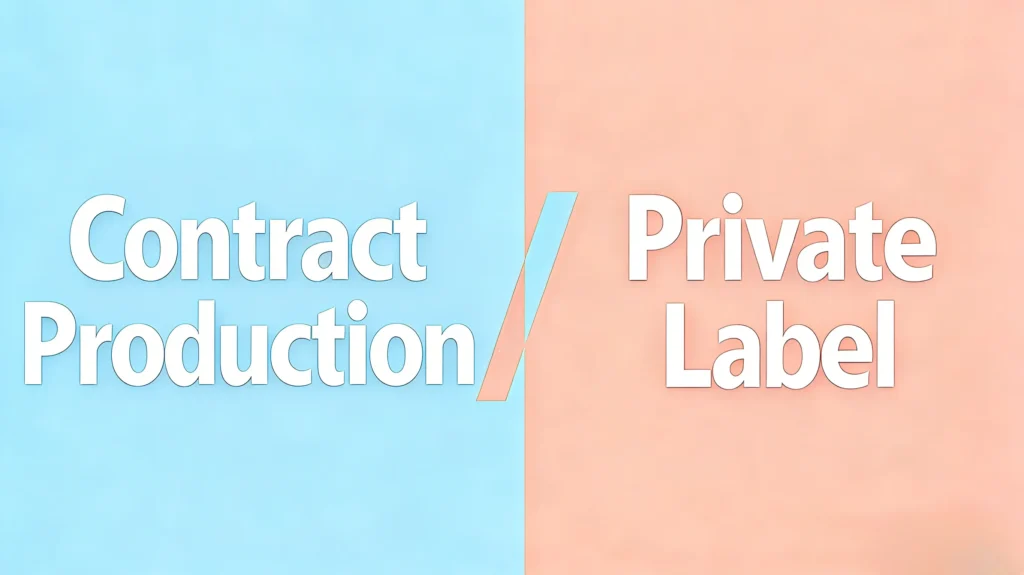
At Carissa Cosmetics, we guide our clients through the decision-making process between Contract Production and Private Labeling by addressing 4 strategic pillars:
Who are your target customers?
- Private Label: Optimized for fast monetization using market-proven formulas.
- Contract Manufacturing: Focused on product differentiation to build a competitive “moat.”
Are you chasing market trends, or building a proprietary formula?
- Private Label: Trend-driven product selection
- Contract Manufacturing: Proprietary, custom formulations
Would you like to partner with us on product R&D?
- Private Label: Stay focused on marketing and advertising
- Contract Manufacturing: Deep involvement in co-development
What is your budget?
- Private Label: Low MOQ, optimized for short-term profit
- Contract Manufacturing: Higher MOQ, higher long-term ROI
Chapter 4: Cosmetic Contract Manufacturing Workflow
Step 1: Initial Consultation
We begin by learning about your brand DNA, target audience, and desired product functionality. Our expert team conducts a feasibility assessment to align your vision with the right technical implementation.
Step 2: R&D and Prototyping
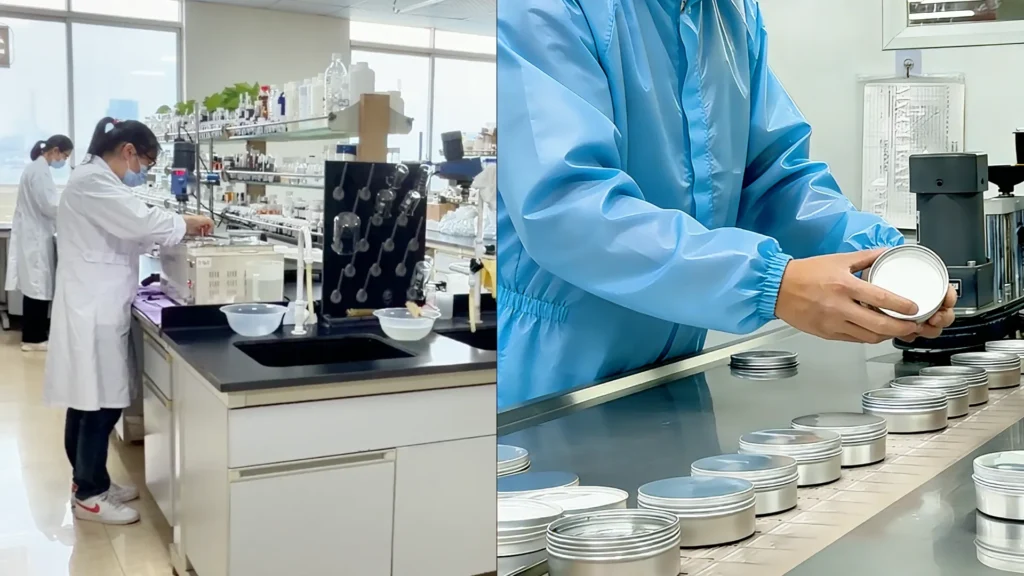
Our team of senior cosmetic chemists develops custom formulas from the ground up. This phase involves rigorous ingredient screening, texture optimization, and ensuring regulatory compliance across global markets.
Before mass production, we provide samples for your approval. To guarantee product stability, we perform comprehensive stability testing, packaging compatibility assessments, and Preservative Efficacy Testing (PET).
Step 3: Manufacturing and Quality Control
Leveraging our automated, ISO and GMPC-certified facility, we offer scalable production—from low MOQ trial runs to full-scale mass production.
Our process integrates rigorous real-time QA protocols and batch testing throughout the entire production cycle. We guarantee full compliance with industry standards, including FDA and GMP guidelines.
Step 4: Packaging and Logistics
We provide a one-stop solution for both primary and secondary packaging, balancing aesthetic appeal, functional durability, and cosmetic labeling compliance.
From cosmetic packaging sourcing to end-to-end logistics, we manage the entire supply chain to ensure timely delivery to your warehouse or distribution center.
Chapter 5: First Step to Success: Partner with a Reliable Cosmetic Factory
Cosmetic contract manufacturing is the smartest strategy for launching a beauty brand. It means you don’t need to invest millions into building a lab, purchasing expensive filling lines, or shouldering the complex costs of compliance maintenance.
Instead, you partner directly with cosmetics experts to transform your brand vision into shelf-ready, highly competitive products.
FAQ
Q1: Can we work together even if I don’t have a ready-made formula?
Absolutely. We offer a library of thousands of market-validated base formulations. You can select a base aligned with your brand positioning and customize it by adding specific active ingredients, or our R&D team can develop an exclusive formula for you from scratch.
Q2: Can you replicate a formula if I provide one?
This is one of our core strengths. Through formula benchmarking and development, we can reverse-engineer a target reference by analyzing and replicating its texture, scent, and key functional efficacy.
Q3: What are the biggest risks in cosmetic contract production, and how can they be mitigated?
The core risks are regulatory uncertainty and supply chain instability. Many manufacturers only discover that an ingredient is prohibited in the target market after mass production.
Q4: I’m new to cosmetic products — how do I get past the high entry barriers of contract manufacturing?
For emerging brands, we recommend starting with a Private Label for your first product run. Once sales are confirmed, we upgrade you to a fully customized Contract Manufacturing for the second run, helping you navigate the financial pressures of the startup phase with ease.
From CARISSA Cosmetics, I’m a cosmetic design expert in this field for more than 20 years. We offer private labeling and contract manufacturing for various cosmetic products, including aerosol spray, shampoo & conditioner, hair styling & care, and more. Ask for a quote for your ongoing beauty business now!