Introduction:
When it comes to personal care and beauty products, some ingredients are instantly recognizable — baobab oil, tea tree oil, hyaluronic acid, vitamin C.
But if you carefully check the ingredient list, you may come across an unfamiliar term: Dimethicone.
You might wonder: Is dimethicone for hair and skin is effective? Is it safe? This article uses plain, accessible language to answer the key questions you actually want to know about dimethicone — all in one place.
CATALOG
Chapter 1: What is Dimethicone?
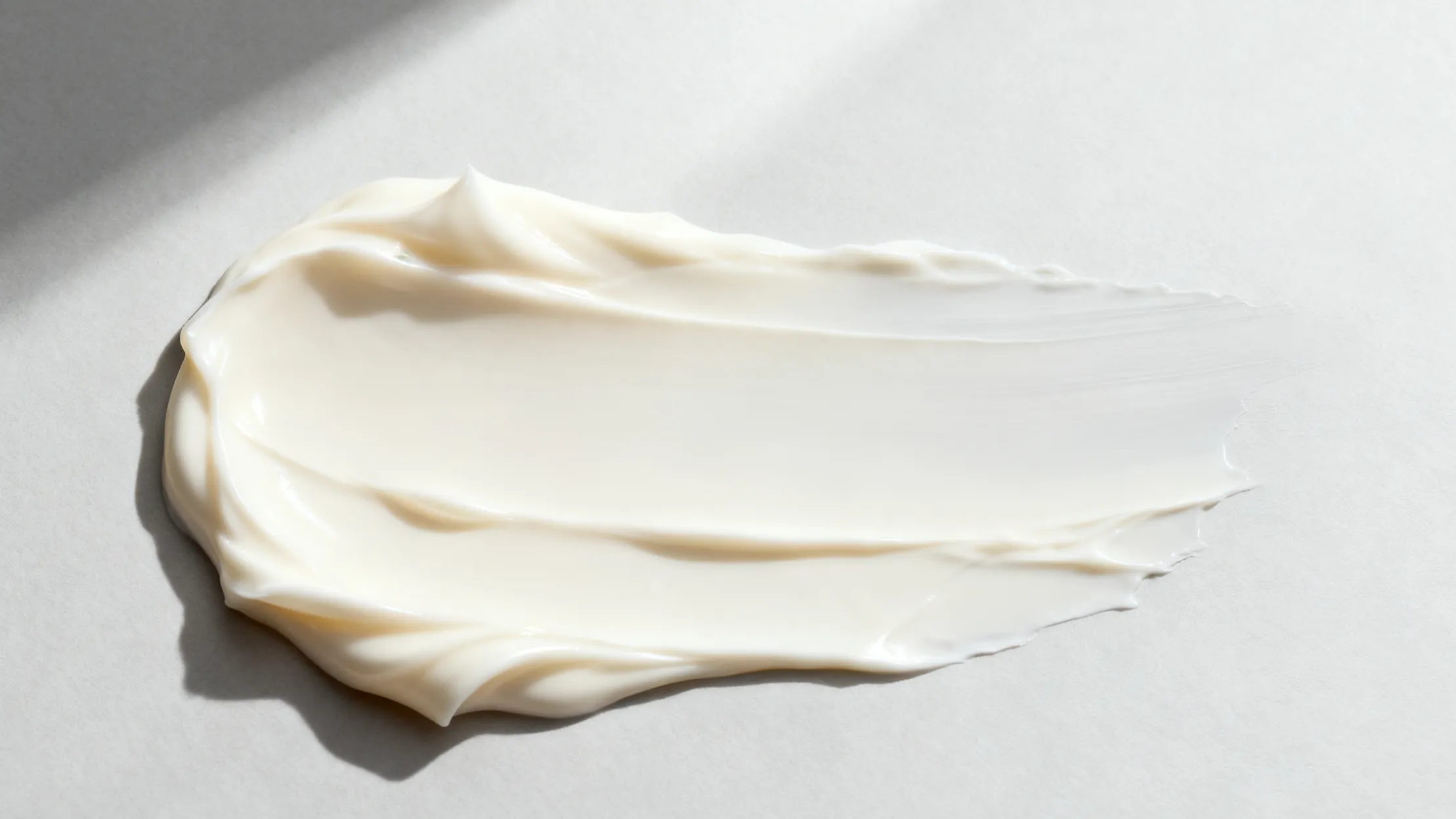
Dimethicone (INCI: Dimethicone) belongs to the silicone family — a class of synthetically derived organosilicon polymers. It is characteristically silky, colorless, odorless, and chemically inert.
Featuring semi-occlusive ingredient, dimethicone oil is widely formulated into emulsions, foundations, and other cosmetic products.
Chapter 2: What Are the Benefits of Dimethicone?
Dimethicone features a high molecular weight , which means it does not penetrate into hair follicles or pores. Its key benefits are as follows:
Dimenthicone for Hair
- Smoothing the Hair Cuticle
Repeated chemical treatments, heat styling, and UV exposure cause the cuticle layers to lift, leaving hair feeling rough and frizzy.
Dimethicone for hair fills in these micro-gaps, instantly imparting a smoother, sleeker texture.
- Enhancing Hair Shine
Shine is a direct function of light reflection off a smooth surface.
Once damaged cuticles are coated and smoothed by dimethicone, they become more reflective, delivering an immediate and visible improvement in luminosity.
- Thermal Protection
Dimethicone forms a breathable, protective coating over the hair shaft, acting as a thermal buffer against heat-styling tools and reducing the cumulative damage caused by repeated high-temperature styling.
Dimenthicone for Skin
- Moisture Retention
The skin continuously loses water through Transepidermal Water Loss (TEWL). Dimethicone’s thin film slows this process, keeping skin moisture locked in for longer.
When used alongside humectants such as hyaluronic acid and glycerin, it significantly extends their moisturizing efficacy.
- Skin Barrier Repair
For skin prone to redness or Xerosis cutis (clinically dry skin).
Dimethicone’s occlusive film shields the epidermis from external aggressors while reducing transepidermal moisture loss — a core principle in barrier repair formulations.
Chapter 3: Which Products Contain Dimethicone & How to Read the Label?
May Contain Dimethicone
Hair Care:
- Deep conditioning masks
- Leave-in conditioners
- Hair serums and hair oils
- Hair Styling products
- Heat protectant sprays
Body Care:
- Body moisturizers
- Body lotions
Skin Care
- Sunscreens
- Makeup primers
How to Read INCI Label
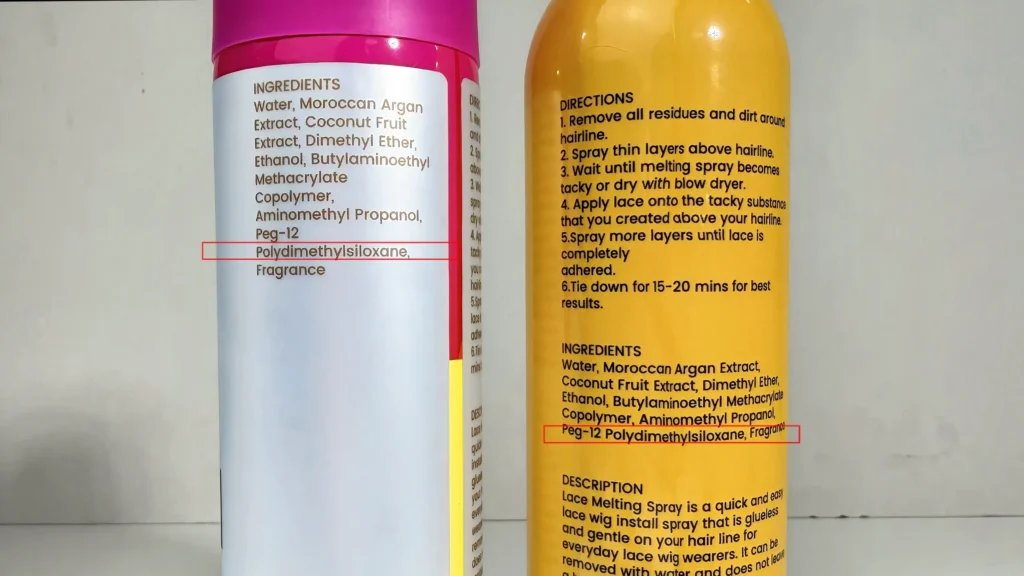
The most effective approach is to seek out naturally derived formulations and check the cosmetic label layout for the following suffixes:
– siloxane: Typically indicates siloxane-class derivatives (e.g., cyclohexasiloxane).
– silane: Volatile silicone compounds commonly found in serums and lightweight emulsions.
– cone: The most prevalent silicone identifier (e.g., dimethicone, cyclomethicone).
Or look for these specific INCI names: Dimethicone, Cyclomethicone, Cyclohexasiloxane, Cetearyl Methicone, Cyclopentasiloxane.
Chapter 4: Is Dimethicone Safe?
The Pros of Dimethicone
According to data from the FDA regulation and the EU’s CosIng, dimethicone is not only permitted for use but is also considered safe. Currently, no research indicates a direct link between dimethicone and damage to hair or skin.
Dimethicone for Skin
It forms a semi-permeable protective film on the skin surface, effectively locking in moisture while blocking out external irritants.
Dimethicone for Hair
This is particularly important for eczema patients or those with sensitive skin and a compromised barrier, as it can significantly promote the self-repair of damaged skin.
The Side Effects of Dimethicone
While the physical film formed by dimethicone provides instant smoothness, prolonged use without deep cleansing can negatively impact both skin and hair.
On the skin, this “occlusive seal” may obstruct the excretion of metabolic waste and trigger closed comedones (whiteheads).
On the hair, water-insoluble silicones accumulate layer by layer like plastic wrap (Build-up), leaving strands increasingly greasy, flat, and devoid of volume.
If you wish to avoid the vicious cycle of “build-up and deep cleansing,” it is recommended to switch to natural plant-based formulas.
Who Should Avoid Dimethicone in Cosmetics?
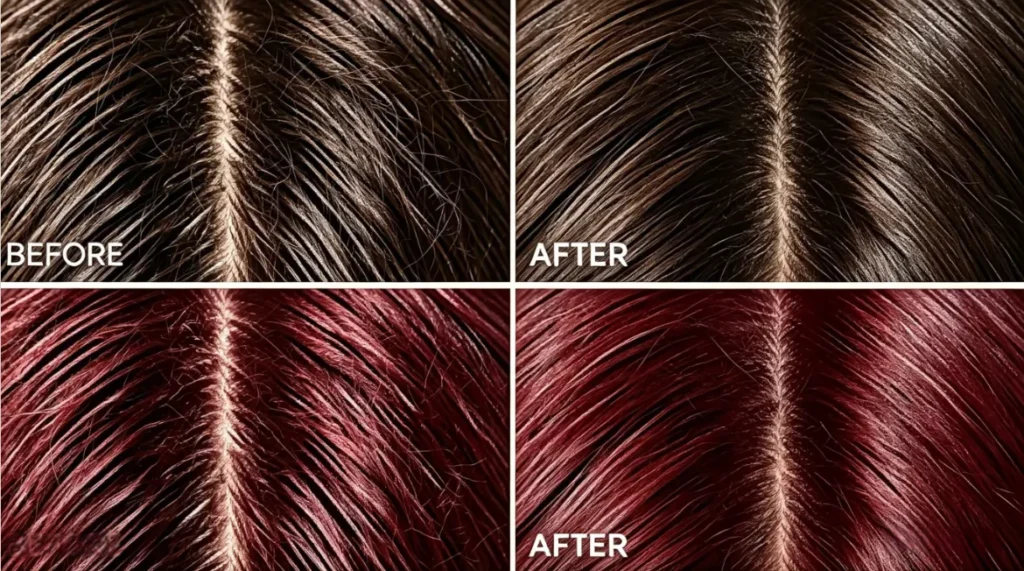
Hair
– Fine or Limp Hair: Prolonged silicone use adds coating weight to the hair shaft, accelerating volume loss in hair that already lacks structural support.
– Naturally Curly Hair: Dimethicone for hair may form a thick coating that impedes water penetration into the shaft, compromising natural curl definition.
– Pre-Perm Hair: Silicone film can inhibit the penetration of hair color or waving agents. A thorough clarifying wash is recommended prior to any chemical treatment.
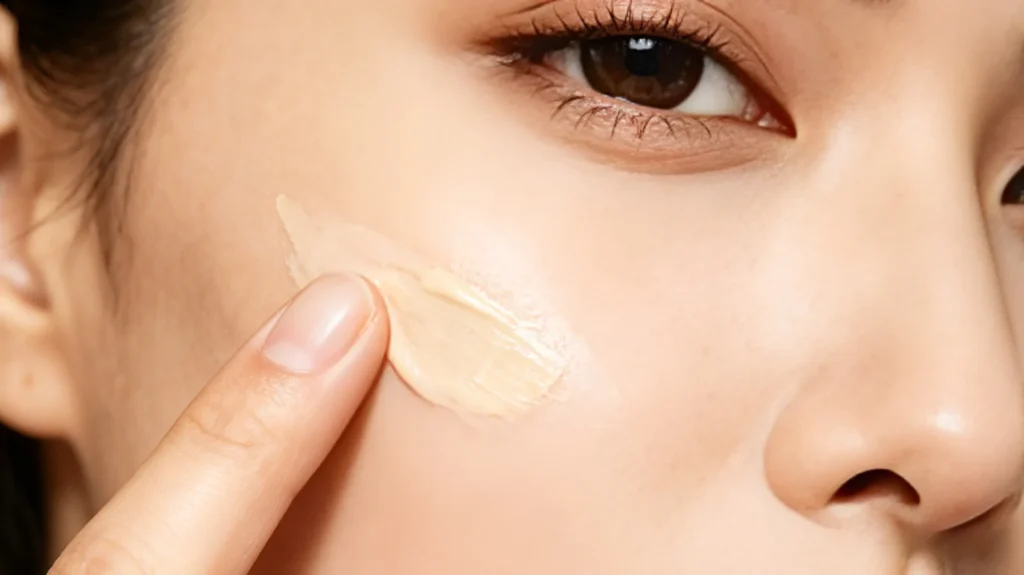
Skin
– Oily Skin: The silicone film can obstruct the natural flow of excess sebum, which not only intensifies facial greasiness but also traps dust and dead skin cells if not thoroughly cleansed.
– Combination Skin: In the high-oil T-zone (forehead, nose, and chin), silicone buildup may lead to enlarged pores and inflammation.
Furthermore, it fails to biologically address the deep dehydration issues in the U-zone (cheeks).
Chapter 5: Dimethicone Alternatives in Cosmetic Formulation
Very few ingredients can simultaneously replicate the lubricity, moisture retention, and breathability of dimethicone.
With advances in green chemistry, howerver, many naturally derived active ingredients not only mimic silicone’s sensory performance but also provide genuine biological nourishment while being significantly more eco-friendly:
Squalane
Derived from olive or sugarcane, squalane is a naturally occurring component of human sebum. It provides a silky, lightweight skin feel and forms a biocompatible, skin-absorbable protective film.
Aloe Vera Extract
A natural humectant and anti-inflammatory active ingredient. Aloe vera delivers soothing and conditioning benefits for both skin and scalp, making it ideal for sensitive skin and scalp formulations.
Coconut Oil / Argan Oil / Shea Butter
While slightly heavier in texture than silicones, these botanically derived emollients are rich in essential fatty acids and fat-soluble vitamins capable of penetrating the hair cortex or skin’s stratum corneum, delivering genuine deep nourishment.
Your Trusted Partner for Natural Formulation Solutions
With over 15 years of R&D expertise, Carissa Cosmetics boasts a mature library of natural formulations to provide you with high-performance alternative solutions. Our formulas replicate an ultra-silky sensory experience while delivering deep biological nourishment and 100% biodegradability, empowering your brand to fulfill its green commitments.
Consult our experts today to receive your complimentary 2026 Natural Formulation Catalog. Discover how Carissa, with our professional natural beauty manufacturing prowess, can become your trusted partner for global expansion and brand elevation.
From CARISSA Cosmetics, I’m a cosmetic design expert in this field for more than 20 years. We offer private labeling and contract manufacturing for various cosmetic products, including aerosol spray, shampoo & conditioner, hair styling & care, and more. Ask for a quote for your ongoing beauty business now!